





Delightful understory tree for those who want a fragrant showy tree that needs less light than most. For semi shaded gardens or areas on the north side of structures, woodland edges or thin woodlands with dappled shade this tree is ideal. produces masses of highly fragrant white blooms in late spring with a perfume that drifts on the air. The large round to heart shape leaves also make an unusual contrast to other plants if backing a flower border or just a different tree in the woodland. Hardy to zone 5 it does not do well in hot humid south eastern states and will need good airflow to ensure its cool in zones 7-8. It likes a good rich well drained soil but does need a reasonable amount of water. however deer and elk dont eat it making ideal for gardens with wildlife issues. It does take more effort to grow from seed than most other trees but its worth it.
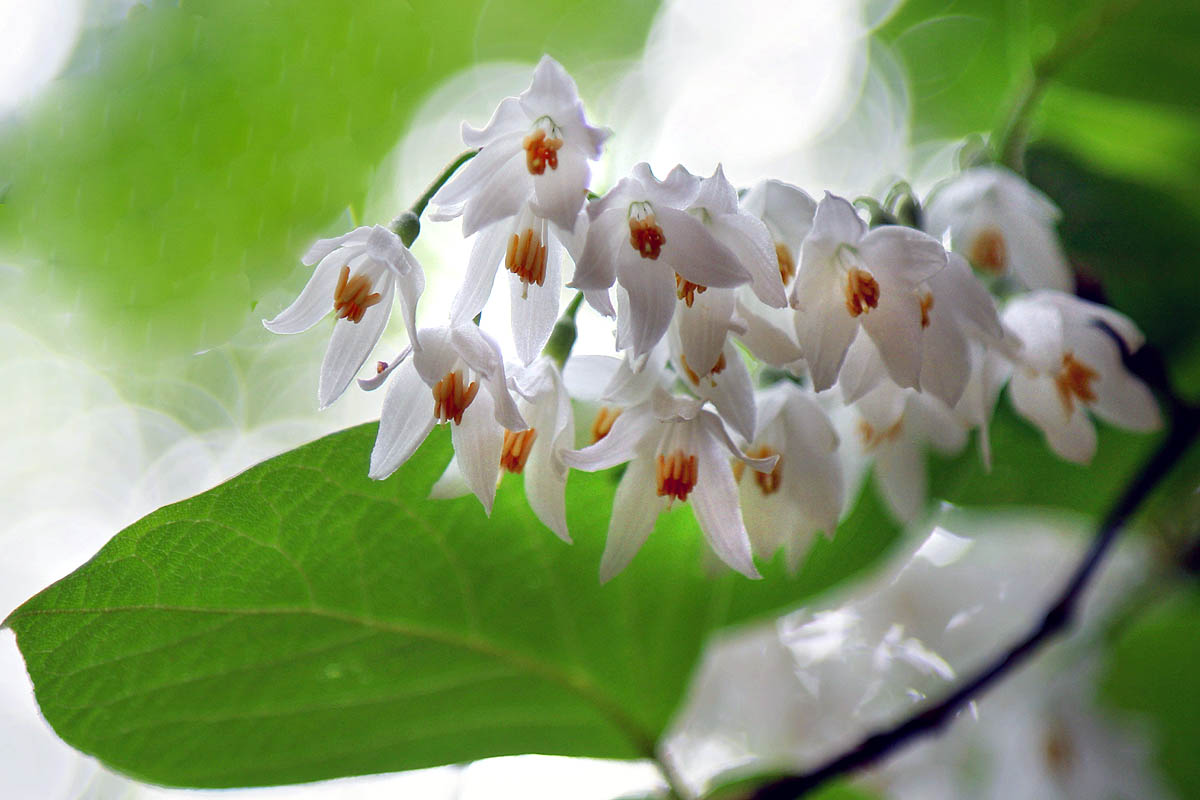
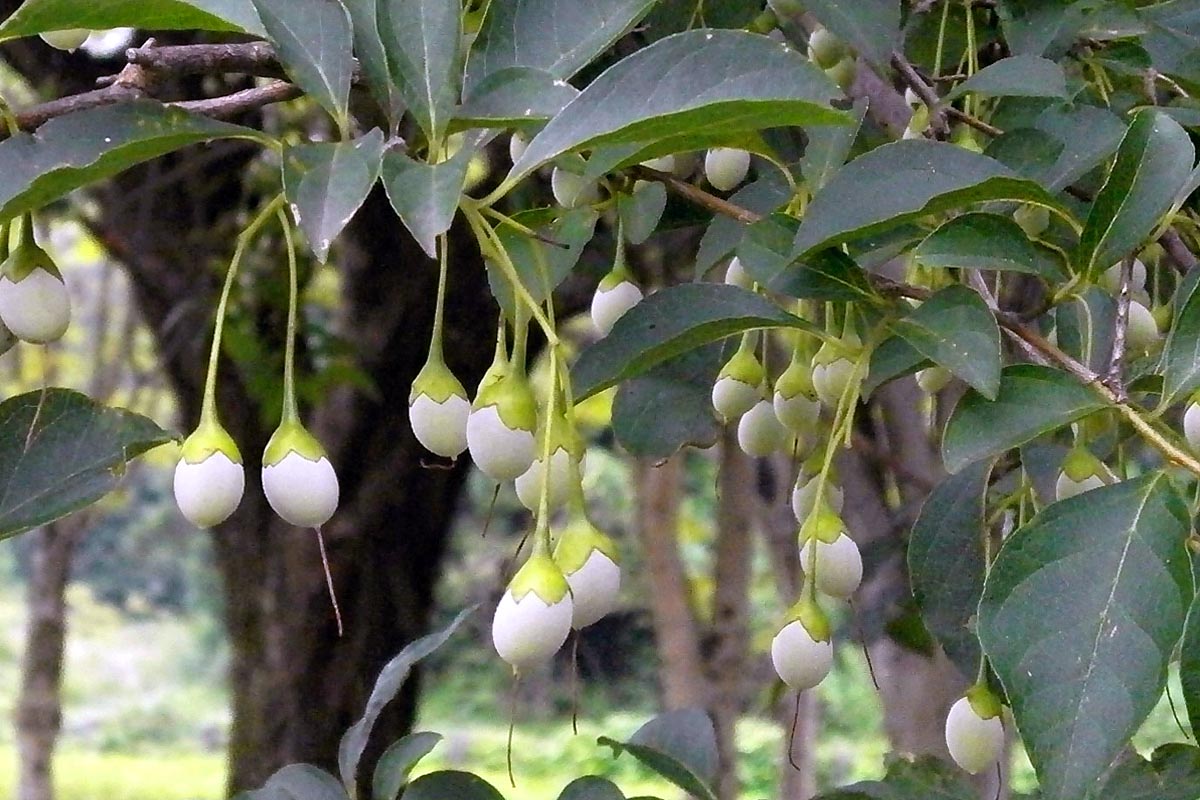
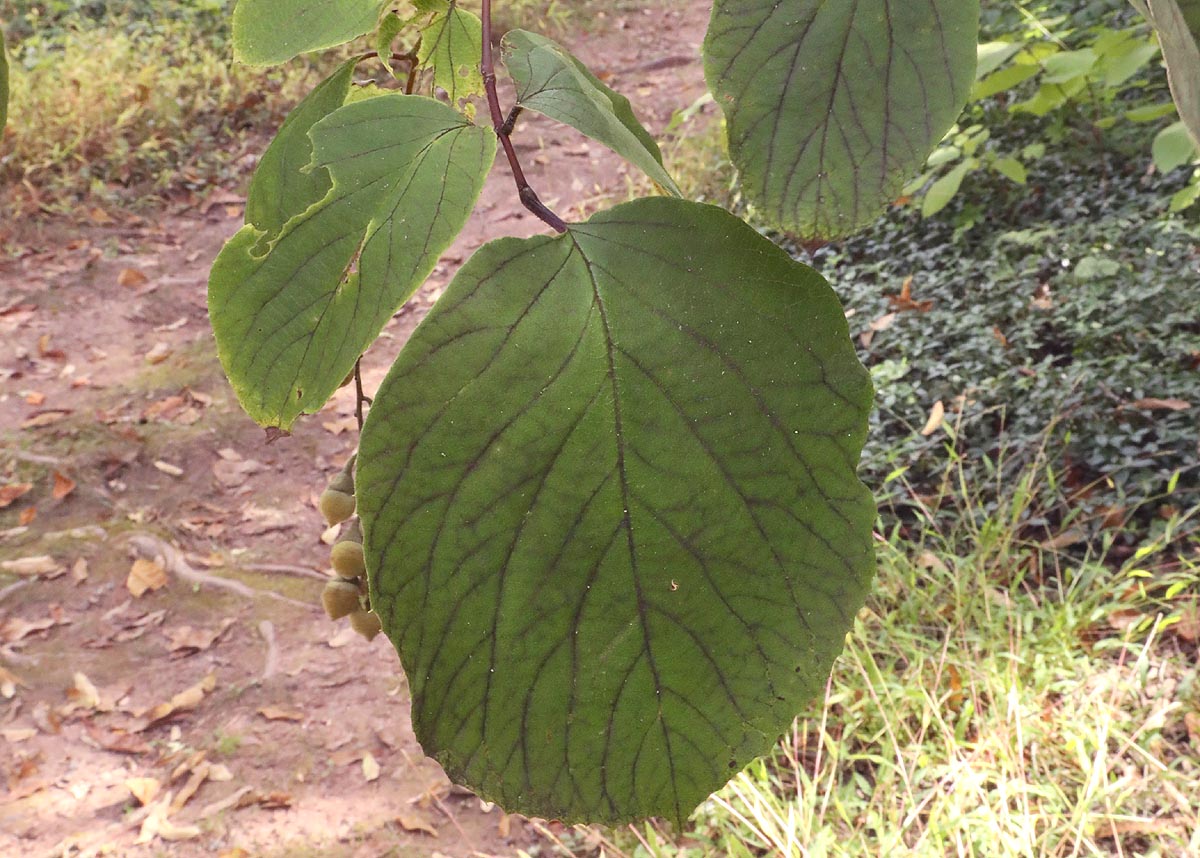
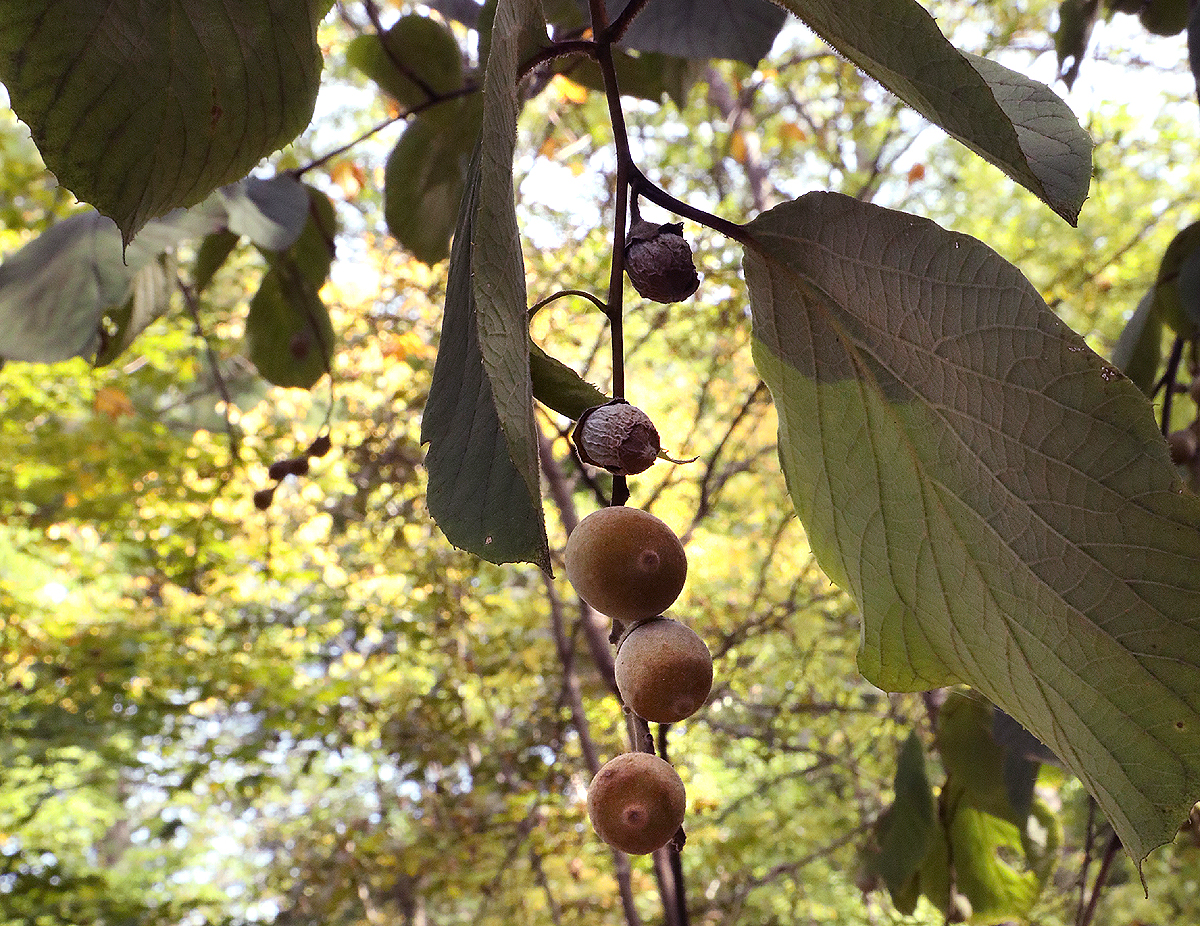
The leaves can be quite large up to 6-8 inches (15-20cm) long, oval to almost round in shape with a point at the end. The margin is gently wavy but may be fairly smooth and the whole leave has a velvety texture. In spring white flowers are produced in profusion in long pendulous racemes (clusters) 8-10 inches (20-25 cm) long at branch tips that hang below the foliage and can often be partly obscured. Each flower is about 1 inch (2cm) wide with five petals surrounding a group of yellow stamens. Flowers last about 2-3 weeks and are extremely fragrant and rich in nectar. Flowers are followed by small ovoid fruits known as drupes about 0.6-1 inch (1.5-2cm) long green maturing to orange or brown with a slightly velvety surface and persistent calyx or "cap". The fruit itself is a hard brown seed that is inedible. The bark on younger trees is light brown to gray but older trees tend to slough off some bark to expose the orange bark beneath which provides good winter interest.
Clear an area and dig in a good amount of compost to ensure it is rich humus that the trees like. Plant several seeds about one inch down plant more than you want as seeds tend to germinate at different times this will hopefully ensure that you get some good strong seedlings.
MARK THE AREA. Its easy to forget where you planted the seeds when spring comes and if they are stubborn another season too. You dont want to accidently pull up or mow down your new seedlings.
Protect the area from wildlife. These seeds are quite large and will make a tasty snack for many kinds of wildlife. Protect the area so you dont lose all your seeds.
This is the main reason we always recommend artificial manipulation so you have control over your seeds and they dont get eaten.
1. Soak the seeds in warm water for 24 hours to soften them. While some sources suggest using a knife to gently nick the seed coat this can easily be overdone and the baby seed is damaged so it wont grow. Its best to just soak them.
2. Get some sand, play sand from the home improvement store is the best. If you have sandy soil or any other means of sand ensure it is sterile first by placing it in a glass dish in the microwave to 10 minutes on high. Leave it to cool before removing and then keep in a sealed container until needed. This will kill anything in the sand and make it useful. DO NOT USE SAND FROM OCEAN BEACHES! Even if you wash it the salt never truly goes away and can kill the seeds.
3. Place seeds in sand in a bag and moisten it lightly. A zip loc sandwich bag is ideal for this stage. Place the bag in the dark somewhere in your home that is warm. Label it so you remember what it is when you find it again later. Leave in the bag for 3 months.
4. Move the bag to the refrigerator for 4 months. If its winter by this time you can pot on your seeds at this time and leave them outside in a protected area or seeds can be potted out and left outside.
Alternatively check our Stratification Instructions and see if a different method suits you better.
5. Potting up. Use small individual pots one for each seed in some sterile potting mix cover seeds to about 3/8 inch (1cm) with more seeding mix and move to a regular seed growing area with good light and keep moist until seedlings sprout.
6. If seedlings refuse to sprout by time winter arrives again, wrap pots in plastic to keep them moist and place either outside or in a cold garage or shed for the winter and try again the next spring.
Light. Does will in both full and part shade with full sun begin recommended for zone 5 and progressive amounts of shade as zones become warmer. In shady areas it should have at least 2-4 hours of direct sun but sheltering from noon sun in warmer zones is best offering either morning, afternoon or both. Too much shade and it will not produce as many delightful flowers. It works well as a dappled shade understory tree or woodland edge on the northern side.
Soil. Prefers an organic rich will drained soil that may be slightly acidic something around pH 5.5 - 6.5 is best, it will tolerate neutral but strongly alkaline may cause leaf yellowing (chlorsis). Does not do well in heavy or clay soils needs well draining, if your soil is wetter it will need amending or plant the tree on an mound of amended soil. A humus rich soil is best with mulching around the base to help keep the roots cool and moist.
Water. Needs to be kept moist when young run a soaker hose around the base and water at least weekly. This tree does not do drought well and will need a deep watering weekly until it is well established. using mulch around the base to keep the moisture in the soil is very beneficial just ensure it is not piled near the trunk as this can cause rot and rodent damage. While it likes to be moist it does not like to be wet and will die quickly in waterlogged soils.
Space. Give it at least 20 feet (6m) from the next tree as its spread and be 15-25 feet (4.5-7.6m) this allows for good air circulation and development of a full crown rather than a lanky tree fighting desperately for enough space. If planting near a building allow at last 10 feet (3m) to ensure good airflow. Avoid planting over any pipes, while it is not an aggressive tree with surface roots it may cause damage if too close to structures.
Pruning. Is not usually needed unless the tree has not been give enough space to develop its true shape. If pruning is needed to remove dead branches or for shape training carry out work in later winter or early spring while the tree is still dormant. Note that the flower buds form on the previous seasons growth so heavy pruning will remove potential blooms.