




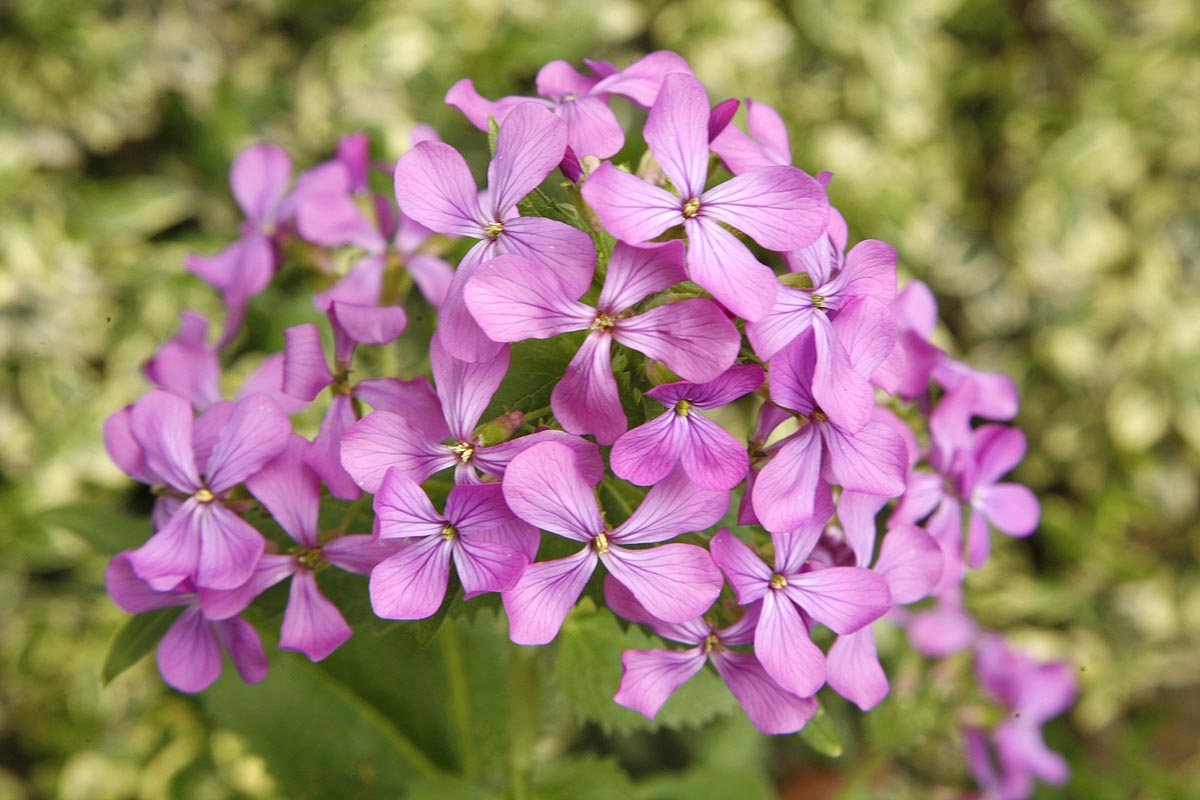
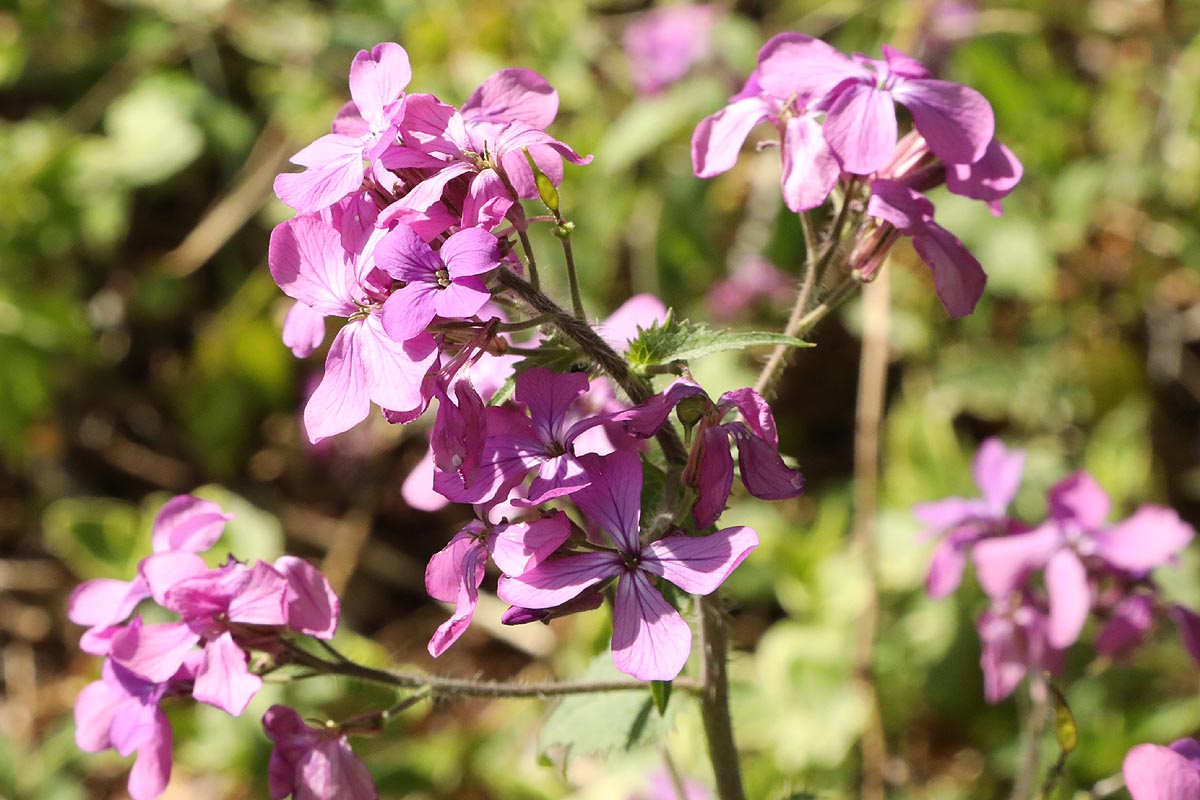
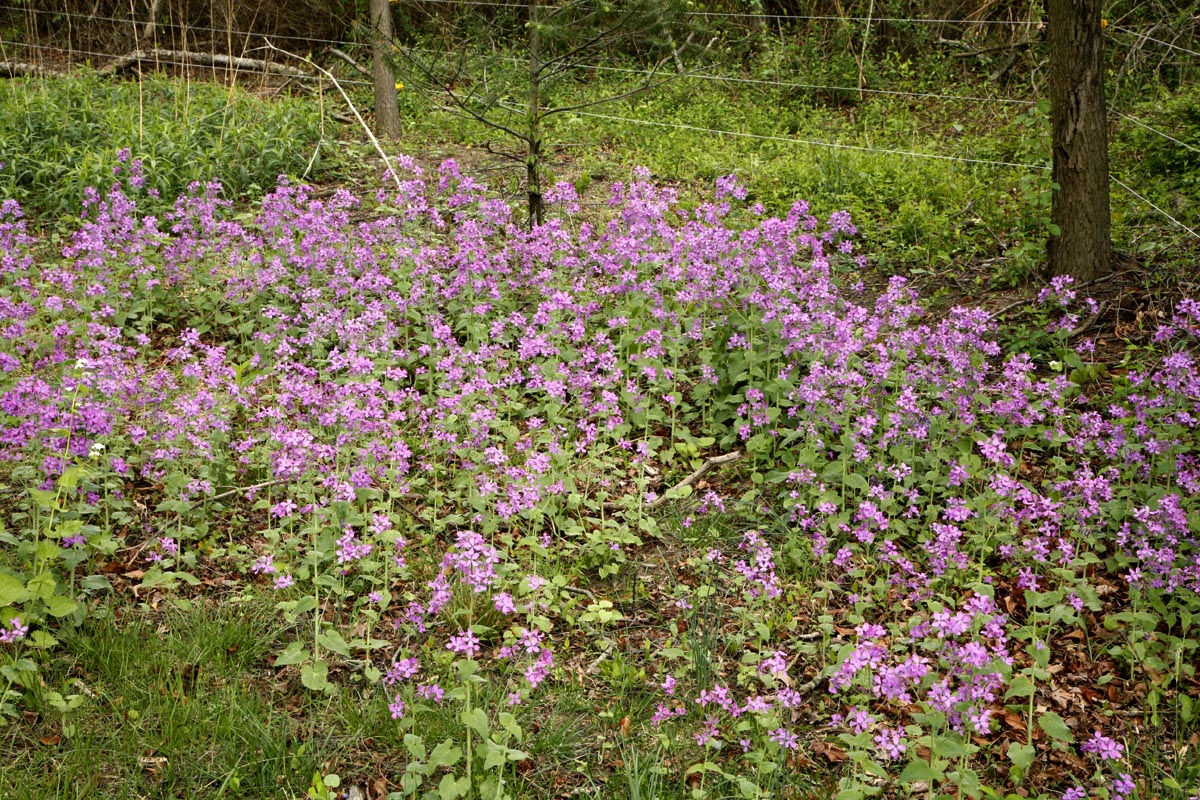
Delightful spring flowering plant with lovely purple flowers on much branched tall stems. Its pretty hardy to zone 5 and prefers light shaded areas or those with late morning or evening sunshine. Not too fussy about soil type but it must be well drained. Will grow on poor soils but it really prefers rich humus with lots of organic material when it will produce much larger plants with more flowers. Very easy to grow just sprinkle the seeds where you want it to grow. Can be done in very early spring or late summer to fall/autumn for spring flowers. Its mostly a biennial so while spring sown seed may flower the first year it more likely to do so in the second year while fall sown usually flowers in spring. It produces a taproot so it does not like to be moved or transplanted and direct sowing is best.
Does not need a lot of water and is pretty drought tolerant once established. No maintenance really it will take care of itself.
Best part is that its deer proof. They just don't eat it, neither do the rabbits so its ideal for shaded areas, under trees, woodland edges even open woodlands.
Even better it has these lovely shiny silver dollar seed pods. OK you have to split off the outer 'potato chips' on either side to see it but collected and cleared they are awesome!
After flowering the seed pods form. These are unusually large flattened ovals anywhere from 1.5-3.5 inches (3-8cm) across. They begin as green and slowly ripen to a brown looking more like a flat potato chip. The seed pod consists of three sections. The two outer 'potato' chips cover the large seeds which are arrayed on a scintillating silver membrane or septum that looks just like silver coins on fragile sticks. Hence the name 'money plant'. These will persist on the plant for some time but being fragile get torn by wind and debris blowing in them.
In early spring or late summer choose a location and clear the ground or all weeds and debris. Scatter the seeds on the ground allowing about 8 inches (20cm) between plants. Cover lightly with soil and water in. if sown early enough in spring they may flower in their first year. Most commonly they tend to grow a rosette and flower in the second year. Seeds can be sown later in the year after plants would have matured and sown their own seeds for early spring flowering the next year. While many sources state that seeds cannot be late sown late in areas where the ground freezes solid we have not found this to be true and often have the best results after very cold winters.
If plants arise too close together thinning the seedlings will produce larger stronger plants. If crowded they will be smaller with less branching.
Light. It does not like full sun. Here in New Jersey (zone 7b) we have bright sunlight a lot of the time and it does not like it. It tends to grow strongly under trees around shrubs and even on the edges of our woodlands. It will NOT grow in the sunny fields or anywhere in full sun. It will take medium shade on forest edges or open forest and areas where there is early morning or late evening full sun but refuses anything else.
So if you are below our latitude we recommend you treat it as a shade loving plant and the further south you go the more shade it will need. Above our latitude it may tolerate some full sun but its only hardy to zone 5 so most likely just in 5 and maybe 6a.
Soil. It does like rich soil with lots of organic material. We have often found it growing on our compost heaps (which are under the trees) and we get the largest most impressive plants there. It will also grow on poorer soils and even slightly rocky ones but plants will be smaller. It does like it well drained and does not do as well on clay soils that do not drain well. It must be well draining.
Water. Its pretty drought tolerant. Needs water to germinate and grow its first rosette but if you have enough rain it should be fine. Most of ours now grows in areas we do not ever water and it does really well. Its pretty drought tolerant once it gets established due to the deeper taproot.
Maintenance. Not really much. remove seed stems at the end of the year if desired. If want to extend the seed bed crumple the seed pods over the new area when seeds are ripe and let it seed itself. Its pretty hardy. If silver dollars are desired for decoration carefully remove seeds and scatter those separately.
The leaves are course and hairy and the seed pods are bitter so wildlife do not eat this plant. Its one that certainly seems to be deer proof.
Pealing the pods is easy, bend it very slightly grasp both sides and peal back. Even better is to leave them to dry in a garage or other structure then its easy to gently just slide the fingers across the pod and they separate dropping the seeds as they go.
The seeds dried can be ground up to use as a condiment and have a strong peppery flavour which can be used to make a very passable mustard. Since the seeds are much larger than regular mustard seeds it does make it easier to work with.
Folk symbolism. During the Victorian era when the language of flowers was popular it was used to symbolized honesty, sincerity, and financial prosperity. This is where it got its name 'Honesty'.
Potential oilseed. Honesty has an unusual fatty-acid profile so its being explored as a source of new oils for use in supplements, cosmetics and as a lubricant.
Botanical synonyms Lunaria biennis or Lunaria inodora