




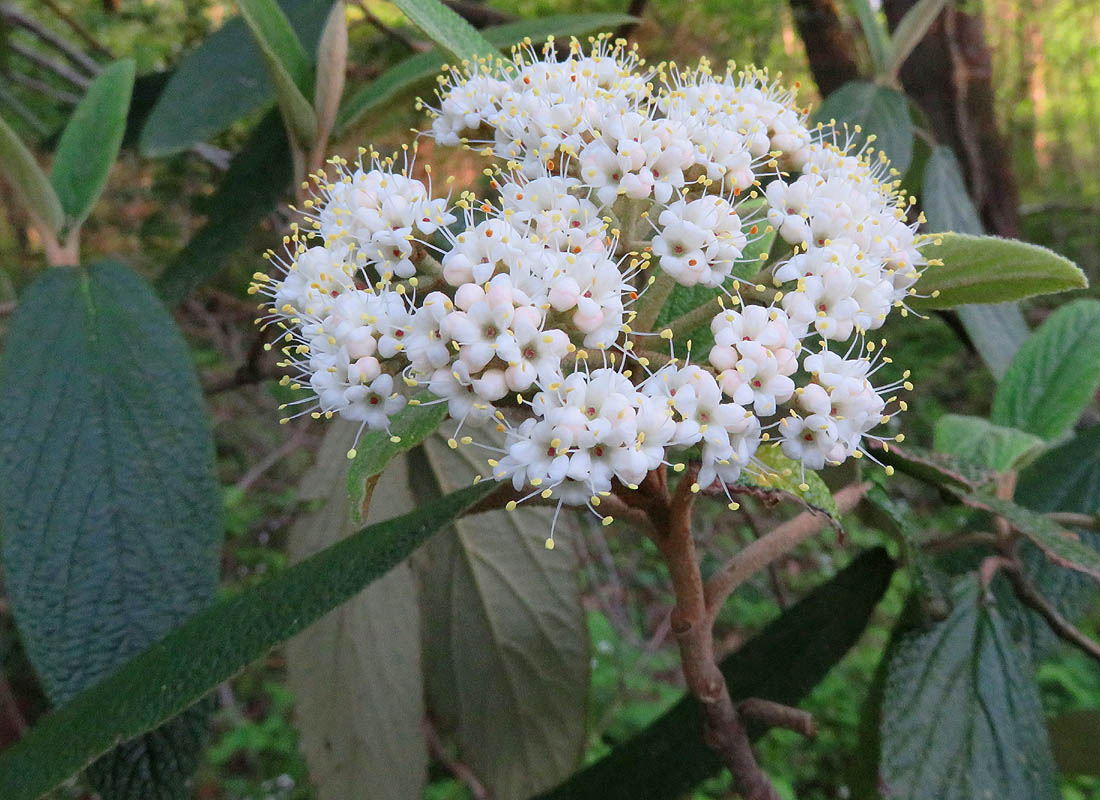


A evergreen shrub with large deeply veined leaves that make it a delightful contrast to any other plant. It will grow in shady areas making it a good understory plant for tree covered areas provided the shade is not too dense. The lovely fragrant creamy white flowers that appear in springtime make it a delight and the red berries that follow are loved by many birds. Hardy to zone 4 it will tolerate most soil types that are not wet. Seeds to need moist stratification before they will germinate but its not difficult to achieve. Otherwise very easy to grow and maintain. Deer and other wildlife dont eat it!
Growing Leatherleaf Viburnum (Viburnum rhytidophyllum) from Seed.
Like a lot of cold weather shrubs this seed needs moist stratification before it will germinate. This one likes to have a period of warm moisture first, this is usually represented by the seeds being held in the moist berries from fall into winter. Then it wants a period of abut 10 weeks of cold moist stratification before it will germinate.
All our seeds have the warm moist period first, then we place them in cold storage, not at present in moisture (we are working on it). So when your seeds arrive you need to give them the cold moist stratification that they require.
See our Stratification Instructions to choose the method which best suits your needs and keep seeds cold and moist for 10 weeks. After that they can be sown like any other seed and placed in warm, but not hot areas to germinate in light conditions. We don't recommend temperatures over 70 F (20-21°C) for germination.
Once germinated carefully transfer to small pots to grow on. Seedlings tend to grow very slowly in their first year so its best to overwinter them in a cold garage - by the window, a cold frame or other such area where its cold but not freezing before planting out in the second year. Seedlings can be planted out in first year if they grow large enough but will need careful protection from browsing by wildlife who while the don't eat the larger plants will often eat seedlings. Also since plants are small ensure you mark the area so you don't accidently destroy it in the springtime.
Light. Full sun is recommended in zones 4-5b. zones 6 and 7a can tolerate full sun but also grows well in dappled shade and in some cases in the understory or tall trees which is not dense shade but not dappled either. In zone 7b and 8 some shade is required especially from noon day sun. It will grow in full shade provided it is not very dense and must be under deciduous trees not conifers. ensure that it has plenty of space around it for airflow to ensure cooling breezes for its thick dense leaves.
Soil. Its not fussy about soil type provided it is well draining. Cannot tolerate wet soils but adapts well to rocky, poor and compacted soils so is ideal for hedges and close to roads.
Water. Small new seedlings need regular watering to ensure they establish well after that they are fairly drought tolerant especially if not growing in full sun. In dry areas mulching around the roots helps to conserve water and keep shrub at its best.
Maintenance: Not much needed. remove older dead branches. If pruning is required do so immediately after flowering to ensure it can regrow and produce flowers the next year.
Synonyms: Callicarpa vastifolia Diels, Viburnum rhytidophyllum f. roseum, and Viburnum rhytidophyllum