





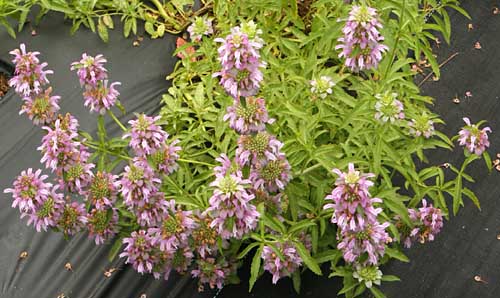
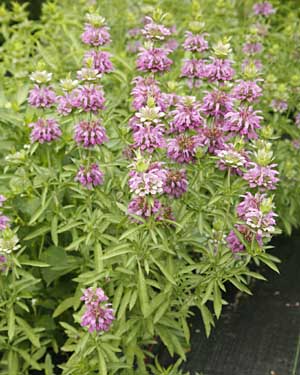
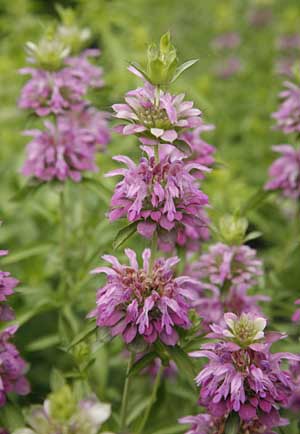
Lemon Bergamot (Monarda citriodora) organically grown flower seeds. Floral Encounters.
Overlay Text
Item # Packet size Nett Weight Number Seeds(approx) Price Qty
Small 0.06 g 100 seeds $2.20

Please note: all seeds are sold by weight and seed count is approximate.

To keep seed prices low much of our seed is semi cleaned. More Info


Everyone knows parsley its one of the most popular herbs in the world. Not as many realize that you can grow a parsley that also gives you a thick fleshy root like a parsnip to eat as well as the leaves. This is a two in one vegetable and herb. The leaves are very similar in appearance and taste to flat leafed or Italian Parsley and can be used in the same manner. Do not harvest as many leaves as you would with regular flat leafed parsley to ensure that the thick fleshy roots are there to be dug in fall/autumn. The best time is after the first frosts as this will help to sweeten the roots and make them more delicious. Parsley root is considered as a functional food because it is used both as a food and a medicine at the same time. It is good for helping keep the kidneys and liver cleansed and is often used in formulas to aid with detoxification. So adding this to your soups, stews and as a root vegetable is good for you body. It also produces some chemicals that can repel many pests that plague other members of the carrot family so growing rows of it between carrots can help to fend off bugs.

Description of Root Parsley (Petroselinum crispum var. tuberosum).
This variety looks almost the same as Italian or Flat Leaf Parsley but it has an added bonus hiding beneath. Like all other species of parsley is a biennial herb meaning it flowers in the second year. In most cases it is grown as an annual and pulled up at the end of the season so the flowers are not often seen. In its first year it produces a rosette of triangular leaves made up of three leaflets (it's called tripinnate) which are darkish green in color. In this variety are wide deeply lobed with strongly serrated edges with all the leaflets mostly in one plane, thus the name flat leafed. The whole leaf stalk can be up to 18 inches (45.7 cm) tall with the plant reaching 25 inches (64cm) across.
Under the soil is where this one differs from normal flat leaf parsley because it produces a big fleshy root that looks similar to a parsnip. It is usually about 6-8 inches (15-20 cm) long, whitish, cone shaped and just as edible as parsnip.
In zones below 7b some of the leaves may overwinter and stay green, in the spring of the second year it will at first produce lush leaves but quickly puts forth tall thin tough thin stems which that can reach 2 feet (61 cm) in height. These support wide umbels containing masses of tiny flowers each with five yellowish green petals. At this point the leaves turn bitter and are not useful in cooking. Blooming can last two or more months in mid to late summer they are followed by small seed capsules each containing two brown curved seeds that are also highly aromatic and the source of parsley oil.

Growing Root Parsley (Petroselinum crispum var. tuberosum) from Seed.
Parsley seeds are notoriously slow to germinate and can take anywhere from 2-5 weeks. The main issue is that the seeds contain furanocoumarins and essential oils that naturally inhibit germination and contributes to slow early growth. To help overcome this it is recommended that the seeds are soaked in warm - not hot - water overnight. Some sources recommend changing the water at least once to help remove these compounds and help stimulate seeds to germinate.

For root parsley this is especially important because it can take longer to germinate than the varieties grown just for their foliage. It also produces the large taproot and is more sensitive to having it disturbed. If starting inside it is strongly recommended using peat or other decomposing pots to ensure root is not disturbed as it may cause it to fork and produce less edible roots.

Direct sowing.
Since parsley takes so long to germinate it can be overcome by weeds before this occurs and since the little plants look like grass it is extreamly easy to mistake for weeds. For this reason we usually recommend not direct sowing parsley however root parsley needs a far longer growing period than the leaf only varieties if good roots are to be achieved so starting directly as early as possible as soon as the soil is workable prudent.

Sow seeds as soon as the soil can be worked and no more ice or snow is expected. Seeds are slightly cold tolerant and the semi cold warm cycle can help stimulate germination but again do not expect it to be quick. In mild climates they can be sown in late fall for early spring sprouting. Once seedlings emerge and develop their first sets of leaves they can be thinned to the 6-8 inches (15-20cm) apart. While closer than many plants this helps keep the roots long and straight rather than branching out.

Starting inside.
Use peat pots or some other kind of dissolving pot if possible. Its very important that the roots are not disturbed. Folding paper inside other pots or even small tall plastic water bottles with the tops cut off can be ideal as it allows the long roots to develop and the paper can be lifted out and directly planted without causing any disturbance.

Seeds also need warm soil for best germination rates. Due to the slow germination seeding in flats or individual pots indoors is recommended to reduce weeding and create strong plants for early harvesting. Start seeds about 6-8 weeks before the last frost date indoors or direct sow after frost danger has passed. Only lightly cover the seeds and keep them moist. Seedlings look more like grass when the do emerge and are slow to begin with. Transplant into individual pots as they grow past the four leaf stage and grow on before transplanting outside. Space plants 6-8 inches (15-20cm) apart. This will help keep the roots straight rather than branching. For more details on growing seeds see our General Growing Instructions.

Whatever method you use ensure that when transplanting the hole is deep enough to take the new plant. use an empty pot as a guide to ensure holes are large and deep enough. Do not ram the plant into the ground and squash the roots. This can cause branching and make roots more woody. .

Location and Care of Root Parsley (Petroselinum crispum var. tuberosum).
All parsley but especially root parsley is grown as an annual. While it is a biennial its only useful in the very early spring before the flower stems arise and the leaves become bitter. For most gardeners this means wasted space for other plants and its usually grubbed out, or for root parsley harvested in the fall.
While it is a cold hardy herb and will survive up to zone 5 with some protection this is useful only if you need very early leaves. In zones 7b and warmer it will likely bolt very early to flower. In zones 10 and more its considered a winter plant as it dislikes hot weather and will bolt quickly when the temperatures rise sometimes even in its first years so consider it a short lived annual in such areas. Root parsley may not perform very well in such areas unless a cold spot is located for it. In zones above 5 it can be grown as a short lived annual.

Light. Full sun in cooler zones down to zone 7a. Can take a little dappled shade down to 8a but warmer than that it will need some shade from noon sun. Morning and evening sun is ideal. Does not do well in high temperatures and very bright sunlight and leaves can become scorched. While it can tolerate quite a bit of shade it will not produce good leaves with strong flavor.

Soil. Prefers a rich loamy soil but it does need good drainage. Adding compost/organic material to the soil before planting and possible a top dressing of mulch. Needs a well draining soil for good root development, a sandy or loam soil is best. Does not do well in heavy clay and will not tolerate waterlogged soils this will rot the roots. If soil is heavy a raised bed may be needed if soil cannot be amended.

Water. Has fairly high water needs to build the tap root. It is not drought tolerant and if the top inch of soil dries out it will wilt badly. Needs about one inch (2.5cm) of water per week. Mulch around the plants or provide a ground covering that keeps moisture in the soil. Do not bury crown when mulching. May need more water on hot sunny days. Water well and often if plants are wilting. Ensure watering is in the evening as plants recover best overnight but water must be adequate enough to see the plant through the next hot day.

Fertilizer. If insufficient organic material was incorporated into the soil before planting extra feeding will be needed. Those high in nitrogen will encourage lush green growth but reduce roots. A balanced fertilizer once a month should be adequate more may be needed if the soil is very sandy and rainfall is high.

Pests of Root Parsley (Petroselinum crispum var. tuberosum).
While parsley can be prone to diseases from the carrot family these are usually looking for regular carrots rather than parsley root and can be confused by parsleys strong scent. Planting root parsley with other carrots is often done to help deter maggots and other pests from those as well as parsley root.
Other pests include, cutworms, armyworms, aphids leaf miners and slugs/snails. Most can be contained if the garden is diverse and healthy allowing predatory insects to feed on the pests. Try not to use chemical sprays if possible it can kill the predators and for most there is no science research on how these chemicals affect humans.

In some gardens voles and moles can chew at the roots. Moles really don't eat the plants much but they can create tunnels that the voles use to reach the roots. This can occur quite deep in the ground cutting off the roots and leaving only the tops. These rodents are hard to control and encouraging wildlife such as hawks, owls and such predators is the best control. Foxes can also be useful but do tend to dig large holes to get at the rodents.
Bolting.
While this can be an issue with other parsley varieties root parsley should be dug at the end of the year so bolting in the second year should not be an issue. Roots left in the ground may overwinter if rodents are not present.

Harvesting Root Parsley (Petroselinum crispum var. tuberosum).
Leaves. While Root parsley can be used as both a leaf and a root care should be taken not to overharvest the top leaves or there will not be enough production to create a large fleshy root. Use leaf sparingly do not cut the whole plant down just a few leaves from each plant at a time. Ensure there is always a large clump of leaves left for the plant to create the roots with. Fresh leaves can be used immediately, or stored in the fridge (wrapped in a damp towel or stems in water) for a week or more. They can also be frozen (either whole in bags, or chopped and frozen with water into ice cubes for dropping into soups later).
Roots. Harvested in the fall best done after the frost has come as this can help sweeten the roots giving it a much better flavor. Roots can be left in the ground during the early winter and harvested as needed. In cold areas mulch heavily and harvest before the ground freezes. Use a fork to carefully dig them from the ground and avoid breakage which can happen if a space is used. Check on roots regularly as they are good food for rodents in the winter, if any chew marks are noticed dig all the roots at this point to ensure you don't loose the harvest completely. once they find a patch they will eat the whole thing often in one or two days.

Culinary Uses of Root Parsley (Petroselinum crispum var. tuberosum).
Everyone knows parsley its one of the most popular culinary herbs in the world. The leaves either fresh or dried are used to add flavor to so many dishes and curly parsley especially is used as a garnish. Root parsley is no different the leaves can be used like Flat leafed often called Italian Parsley it has a similar strong flavor. Nutritionally it is low in calories but high in vitamins A, K, and C and is often used in smoothies to boost nutritional content.

Medical uses of Root Parsley (Petroselinum crispum var. tuberosum).
All parts of the plant are used medicinally the leaves can be used as all other varieties of parsley root parsley has the benefit of offering the thick roots too. The root is considered a powerful diuretic and is used to treat kidney ailments, urinary tract infections, and edema. Since it helps support kidney function it is used in many detoxification processes and formulas. It is also a good digestive aid and research also shows it is good to help alleviate arthritis. There is also research stating that it helps to support liver function and remove toxicity from the liver as well as prevent kidney damage during such excretions. It is considered as a functional food

Other uses of Root Parsley (Petroselinum crispum var. tuberosum).
Dye. Although not commonly used it can produce a yellow green dye on some fabrics and a soft yellow on woolen fibers.
In similar vein the juice is added to many foodstuffs to produce required coloring mostly green or yellow.
Cosmetics. The juice has been used to reduce the look of freckles and dark spots. To lighten and freshen the complexion and reduce puffiness around the eyes.
Insect repellent. Juice applied to the skin is reported to repel mosquitoes. Other reports state soaking the scalp can help remove head lice. Parsley is quite mild so repeated applications may be required.
Animal food. Dried and powered it is often added to chicken feed to help boost immune health and improve egg quality. Many small organic farmers are experimenting with its use instead of antibiotics.

Other important information for Root Parsley (Petroselinum crispum var. tuberosum).
FORAGING WARNING. Young parsley leaves strongly resembles other plants that are poisonous. like fool's parsley (Aethusa cynapium) and young poison hemlock (Conium maculatum) can commonly be mistaken. It is recommended that young plants not be harvested as mistakes can be fatal. Wait for plants to become larger and more easily identified before picking wild plants in this group.

Other names.
Hamburg Parsley, Turnip-Rooted Parsley, Parsnip-Rooted Parsley

 
Item # Packet size Nett Weight Number Seeds(approx) Price Qty
Small 0.06 g 100 seeds $2.20

Please note: all seeds are sold by weight and seed count is approximate.

To keep seed prices low much of our seed is semi cleaned. More Info